Decolonization’s arrested promise: A Cambridge professor on why Bandung’s vision remains unfinished
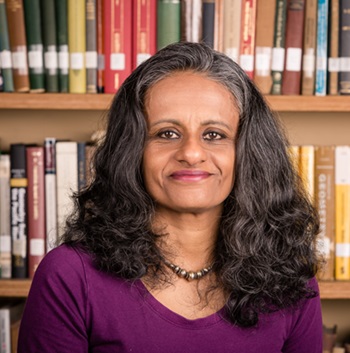
Priya Gopal, a professor of Postcolonial Studies at the University of Cambridge, has delivered a sharp reflection on the concept of decolonization, arguing that its promise remains arrested and unfinished 70 years after the historic 1955 Bandung Conference.
In a tribute to her doctoral supervisor BJ, Gopal traces her intellectual journey from India's JNU to Cornell and Cambridge, framing decolonization not as a completed project but as a continuing struggle. She challenges the notion that flag independence marked the end of colonialism, pointing instead to what she calls "arrested decolonization" across the Global South.
The core argument centers on how decolonization was diverted from its radical potential. While Bandung and the 1956 Paris Congress of Black Writers and Artists brought together thinkers like Frantz Fanon and Aimé Césaire with hopes for deep social and economic transformation, the project was hijacked. What followed was often a mere transfer of power to native elites, leaving intact colonial economic structures, extractive capitalism, and repressive state apparatuses. The result: postcolonial states sometimes became recolonizing forces, replicating the very dynamics they fought against.
Gopal draws a direct line from this arrested decolonization to contemporary crises. She critiques how majoritarianism—exemplified by Hindu nationalism in India—has occupied the space of decolonization, mimicking colonial civilizational rhetoric while pursuing neoliberal privatization. More urgently, she connects this to Palestine, noting how Bandung's state-centric framework excluded both Israel and post-Nakba Palestine. The current situation, she argues, represents "paleo-colonial decimation" livestreamed for over two years, yet the Global South—now including BRICS nations with massive economies—has failed to deploy boycott, divestment, and sanctions against Israel.
Gopal rejects Professor Taiwo's argument that anticapitalism should be removed from decolonization discourse. She insists that colonialism's core dynamic—dispossession, extraction, and wealth concentration—persists under capitalism, whether wielded by Western powers or emerging economies. China, India, Brazil, and even Egypt continue economic ties with Israel while Gaza is flattened.
The question becomes: what sort of world are we preparing for future generations? Decolonization cannot mean embracing colonialism's methods. It must be a qualitative difference, not just a change of guard. For Nigerians watching these global dynamics, the lesson is clear—true decolonization requires dismantling extractive economic systems, not just replacing foreign rulers with local ones.
Will Nigeria and other Global South nations use their economic power to challenge renewed colonial projects, or will they replicate the same dynamics that arrested decolonization in the first place?
SOURCE: https://www.premiumtimesng.com/opinion/847914-who-is-afraid-of-decolonisation-by-priya-gopal.html