Demolitions: Makoko residents, activists react to Lagos Assembly’s relocation proposal
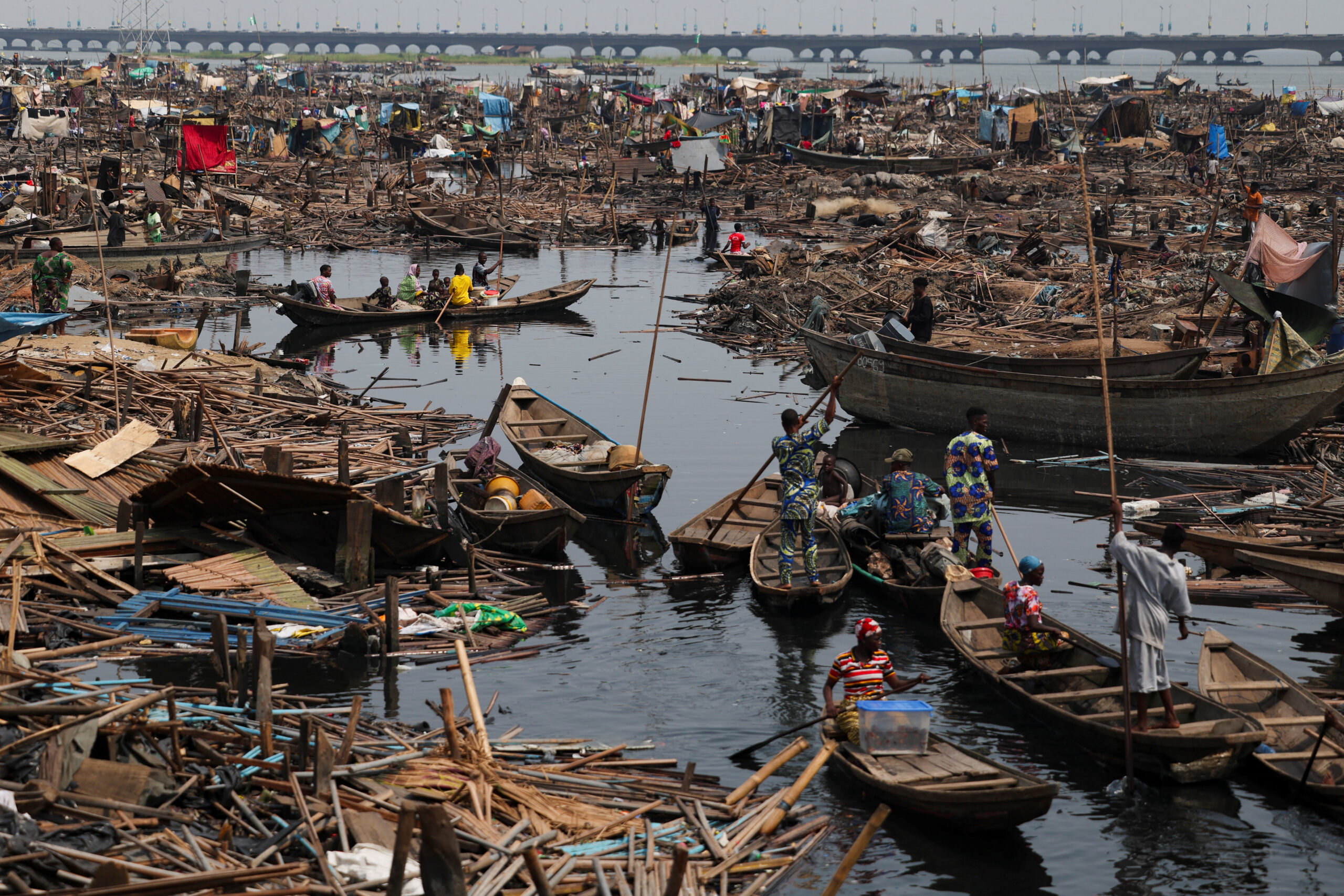
Residents of demolished Lagos waterfront communities, inlcuding Makoko, and civil society organisations have raised concerns over the recommendation by the Lagos State House of Assembly for the resettlement of people displaced from the demolished communities in a proposed low-cost housing estate in Agbowa, Epe. Community representatives told PREMIUM TIMES on Thursday that relocation was never discussed or agreed upon during meetings held with lawmakers after the demolition of homes in the settlement. The leader of the Makoko Community Youth Association, Iroko Temitope, stated that residents were taken aback by reports suggesting an agreement had been reached to relocate the affected people elsewhere. “That claim is not true. There was no agreement with us about relocating people anywhere,” he said. “We nominated a committee to represent the community, but the committee itself was not aware of any relocation decision. If the committee does not know about it, then nothing was concluded.” A school teacher and president of the Makoko Students Association, Kojah Phinehas, also dismissed claims that relocation had been agreed upon during the consultations. “We had several meetings, but relocation was never discussed as a conclusion,” he said. “What we were told was that our concerns would be presented to members of the House of Assembly and that they would deliberate on them and get back to us.” Activists criticise relocation plan Civil society groups criticised the proposal, describing it as inconsistent with the demands raised by residents. Human rights activist Hassan Taiwo, popularly known as Soweto, said Makoko residents had consistently demanded compensation for demolished homes, restoration of livelihoods and inclusion in any redevelopment plan for the area. “At no time during the interface between the community and the authorities did the community request relocation,” Mr Taiwo said. “The residents want compensation for the demolitions and for the losses they suffered. They also want to be included in the development project planned for Makoko.” Mr Taiwo said relocating residents to distant communities could disrupt their livelihoods and social networks. “The people of Makoko deserve development, but they should not be displaced in the process,” he said. “They have lived there for generations and built the community with little or no government support. If the government wants to develop the area, the original residents should be the first beneficiaries.” Zikora Ibeh, assistant executive director of the Corporate Accountability and Public Participation Africa (CAPPA), alleged that the proposal reflected a broader attempt to remove residents from the waterfront community. “One thing is now unmistakably clear: the Lagos State Government wants Makoko emptied of its people and appears determined to achieve that objective by any means necessary,” Ms Ibeh said. She said the demolition exercise displaced thousands of residents and triggered protests across the city. According to her, the Assembly’s proposal to relocate residents outside the community does not reflect any agreement reached with Makoko residents. “Makoko residents never reached any conclusive agreement with the House of Assembly to relocate outside their community,” Ms Ibeh said. She called for an independent panel comprising community representatives, civil society groups, legal experts and urban planning specialists to examine the broader pattern of forced evictions in Lagos and propose rights-based solutions. Background The Lagos State House of Assembly recommended relocating residents displaced by demolitions in Makoko, Oko-Agbon, and Sogunro to a low-cost housing estate in Agbowa, Epe, following adoption of a report by its Committee on Rules and Business, chaired by Noheem Adams. The report noted that demolitions carried out by the state government in late December 2025 and early January displaced thousands of residents, destroying homes and properties. Many residents rely on fishing, which requires living along the waterfront. “The demolition has worsened living conditions in Makoko and surrounding areas, leading to environmental and health concerns, as well as safety risks,” the committee said. Governor Babajide Sanwo-Olu has announced plans to invest about $10 million in regenerating Makoko, including a proposed “water city” project aimed at modernising the historic fishing settlement. Palliative measures, including N20 million for food support, have also been set aside for affected residents. Earlier in February, the Assembly had ordered an immediate halt to further demolitions after meeting with community representatives, citing disputes over setback measurements along the waterfront. Some residents alleged the demolition exceeded the originally communicated 30-metre setback, reaching several hundred metres in some areas — a claim the government denied. But the Lagos State Government defended the demolition exercise, describing it as necessary to protect lives, public infrastructure, and the environment. State officials have said that buildings along critical waterways and under high-tension power lines pose safety risks. State officials made the defence during discussions on Ask Lagos, a weekly X-space forum organised to engage residents. The Commissioner for Information and Strategy, Gbenga Omotoso, said the law requires buildings to maintain prescribed setbacks, warning that accidents involving live cables or waterways could lead to large-scale disasters. Also, Olajide Babatunde, Special Adviser on e-GIS and Urban Development, said the demolitions form part of a broader urban regeneration plan to enforce planning standards and make Lagos a more resilient city. On Tuesday, a Nigerian architect, Folasope Pinheiro of London-based firm Greig and Stephenson, warned that Lagos’ worsening housing shortage and the recent demolitions in Makoko could displace tens of thousands of residents. In a statement shared with PREMIUM TIMES, Mr Pinheiro said the rapid growth of Lagos’ population is outpacing housing development, forcing many residents into informal settlements like Makoko. He described the community as a historic fishing settlement, often called the “Venice of Africa,” with houses built on stilts over the lagoon and households accommodating six to ten people. Share this: Click to share on X (Opens in new window) X Click to share on Facebook (Opens in new window) Facebook Click to share on WhatsApp (Opens in new window) WhatsApp Click to share on Telegram (Opens in new window) Telegram Click to share on LinkedIn (Opens in new window) LinkedIn Click to email a link to a friend (Opens in new window) Email Click to print (Opens in new window) Print