Insecurity: Scholars harp on peace-building efforts, suggest solutions
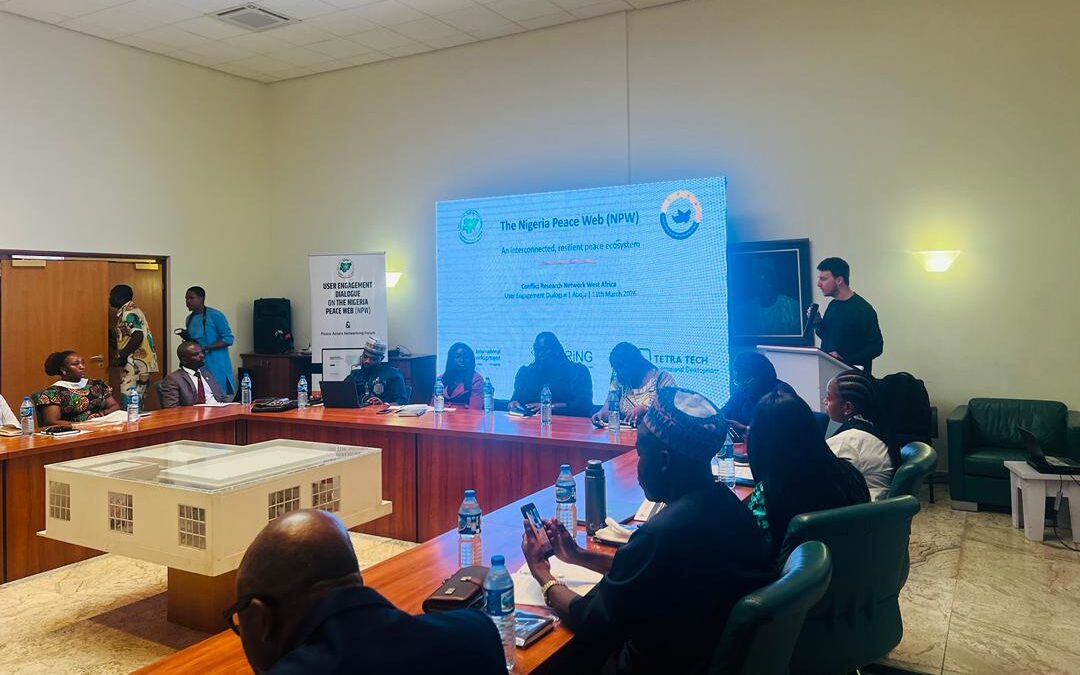
Scholars and peacebuilding experts have called for stronger institutional frameworks, inclusive governance and the integration of traditional conflict resolution systems to address persistent violence in Nigeria. The recommendations were made on Wednesday during a panel discussion at the launch of the ‘Nigeria Peace Web (NPW),’ an open-source digital platform that collates data on peace actors and initiatives in Nigeria. The NPW was launched by Conflict Research Network (CORN), West Africa, at the Shehu Musa Yar’Adua centre in Abuja. The project is supported by the UK International Development, the Strengthening Peace and Resilience in Nigeria (SPRiNG), and Tetra Tech International Development. Institutionalising peace education One of the panellists, Temitope Olowolafe, emphasised the need to institutionalise peace education within Nigeria’s formal education system, particularly at the primary and secondary school levels. Ms Olowolafe, a lecturer at the Department of Peace Studies and Conflict Resolution, National Open University of Nigeria (NOUN), noted that peace education is often treated as a separate initiative rather than embedded within governance and school curriculum. According to her, teaching children conflict resolution and emotional regulation at an early age would help them manage anger and resolve disputes peacefully. “If peace education is introduced at the primary and secondary school levels, children will learn emotional regulation and conflict resolution skills that stay with them throughout life,” she said. The expert explained that early exposure to such values would equip young people with lifelong skills needed to manage conflicts constructively. Panelists from Nigerian universities speak on peace-building initiatives aimed at addressing violence in the country Role of traditional conflict resolution mechanisms Another researcher, Ruthie Gadzama, a lecturer at the Department of Religion and Philosophy, University of Jos, Plateau State, highlighted the importance of integrating traditional conflict resolution systems into Nigeria’s formal justice and security structures. The scholar said indigenous mediation systems, widely used in northern Nigeria, encourage “sulhu (dialogue),” community inquiry and reconciliation among conflicting parties. According to the researcher, these mechanisms have historically played a vital role in resolving disputes before they escalate into violence. “We are not saying the formal system should be abandoned, but the traditional mechanisms should complement it because they have always played a significant role in resolving disputes within communities,” said Ms Gadzama. Farmers as builders of peace infrastructure Comfort Ugbem-Onah of the Department of Sociology, Benue State University, argued that smallholder farmers should not be seen only as victims of violent conflicts but also as active builders of informal peace infrastructure. The researcher explained that farmers in conflict-prone communities have developed survival strategies such as early warning systems, collective farming and information-sharing networks to reduce attacks and maintain stability. “In many rural areas, state security presence is limited, so farmers have created their own systems to monitor threats, share intelligence and ensure farming activities continue,” she said, referring to some communities such as Naka and Katsina-Ala in Benue. “In places like Katsina-Ala, they also have a structure that is working for them,” she said. “And then in places like Naka, it’s not really working.” Promoting inclusion of women and youths Another panellist, Aisha Abdulssalam, a lecturer at the Department of Political Science, Nigerian Defence Academy (NDA), Kaduna State, emphasised the need to strengthen inclusive governance by ensuring meaningful participation of women and youths in peacebuilding processes. She recommended that state and local governments formalise the inclusion of women and young people in peace committees, land dispute panels and farmer-herder mediation platforms. According to the scholar, representation thresholds for women and youths should be embedded in local government bylaws and traditional council frameworks. READ ALSO: Ghana calls for UN probe after missiles hit peacekeeping battalion in Lebanon “The exclusion of women and youths from decision-making undermines the legitimacy and effectiveness of peace initiatives,” she argued. Ms Abdulssalam added that young people constitute a significant portion of the population in many communities and must be involved in shaping solutions to conflict. Strengthening coordination among peace actors Suchi Plangshak, a professor of Criminology at the University of Jos, stressed the need for stronger coordination among government agencies, traditional institutions, civil society organisations and security agencies involved in peacebuilding. Drawing from research conducted in Plateau State and other parts of north-central Nigeria, the scholar said peacebuilding efforts often involve hybrid systems of formal and informal actors whose roles are not always properly recognised. He recommended mapping peace actors, strengthening traditional institutions and increasing funding for state peacebuilding agencies responsible for coordinating peace initiatives. “Traditional leaders, civil society organisations and government agencies are all involved in peacebuilding, but their efforts need better coordination and institutional support,” he said. Policy direction The scholars collectively urged policymakers to strengthen institutional support for grassroots peacebuilding initiatives, increase funding for peace agencies and integrate traditional community-based approaches with formal governance systems. They said such reforms would help Nigeria address complex security challenges and build sustainable peace across communities. Share this: Click to share on X (Opens in new window) X Click to share on Facebook (Opens in new window) Facebook Click to share on WhatsApp (Opens in new window) WhatsApp Click to share on Telegram (Opens in new window) Telegram Click to share on LinkedIn (Opens in new window) LinkedIn Click to email a link to a friend (Opens in new window) Email Click to print (Opens in new window) Print