Lagos Assembly recommends relocation of residents displaced by demolitions to low-cost housing estate
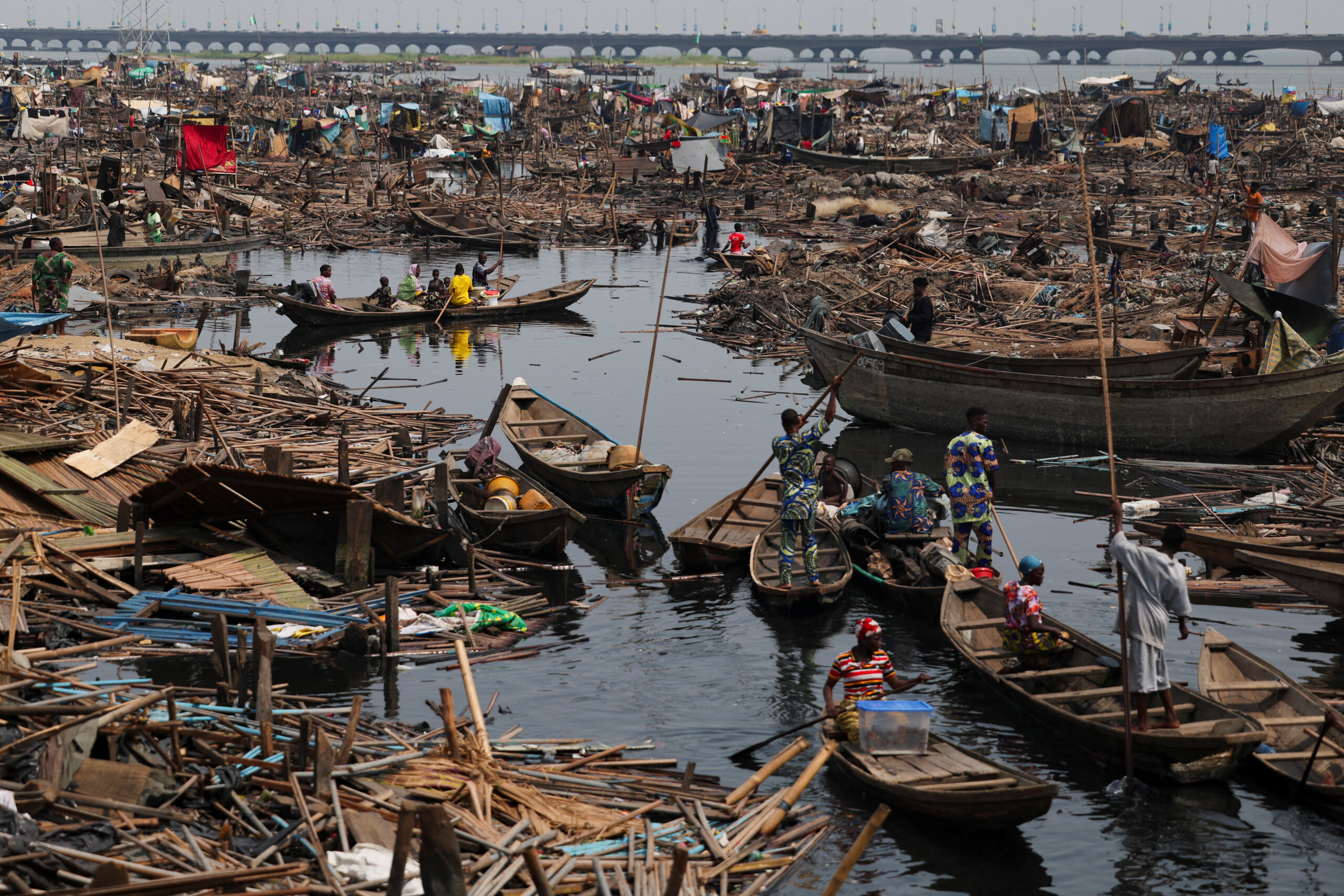
The Lagos State House of Assembly has recommended relocating residents displaced by recent demolitions in Makoko, Oko‑Agbon, and Sogunro to a proposed low-cost housing estate in Agbowa, Epe, amid concerns over the state’s worsening housing shortage and rising tensions in waterfront communities. The resolution followed the adoption of a report by the House Committee on Rules and Business during Tuesday’s plenary, the Punch reported. The recommendation came after the Assembly received a petition titled, “Urgent Appeal Regarding Ongoing Mass Forced Eviction and Illegal Demolition Threatening Tens of Thousands in Makoko, Oko‑Agbon and Sogunro Communities.” Chairman of the Committee on Rules and Business, Noheem Adams, told lawmakers that the committee reached its conclusions after holding five meetings with petitioners and conducting an oversight visit with government officials, agencies, and representatives from the affected communities. The report noted that demolitions carried out by the state government in late December 2025 and early January displaced thousands, including the elderly, women, and children, destroying homes and properties. Many residents depend on fishing, which traditionally requires living along the waterfront. “The demolition has worsened living conditions in Makoko and surrounding areas, leading to environmental and health concerns, as well as safety risks,” the committee said. The lawmakers recommended that Governor Babajide Sanwo-Olu direct the Special Adviser on E-GIS to verify the enumeration report submitted by the affected communities. They also urged the construction of the Agbowa low-cost housing estate to enable residents to continue their fishing activities. Background The Assembly’s intervention follows weeks of protests by residents and civil society groups against the demolitions. In February, lawmakers ordered an immediate halt to further demolitions after meeting with community representatives at the Assembly Complex in Alausa, Ikeja, citing disputes over setback measurements along the waterfront. Following the House directive, its committee led by Mr Adams conducted an on-the-spot assessment of Makoko. Mr Adams urged both government agencies and residents to maintain the status quo pending the committee’s findings. Observers reported debris from demolished homes scattered along the waterfront, with several residents, including women and children, living on boats. Some community members alleged that the demolition exceeded the originally communicated 30-metre setback, extending several hundred metres in some areas — a claim the Lagos State Government denied. Residents, including community leaders and students, called for resettlement, temporary shelters, and adequate compensation, citing their dependence on fishing for survival. Lawyers representing the community, including Jiti Ogunye, said the demolition reportedly extended up to 522 metres in some areas. The Lagos State Government said the demolitions were halted under the directive of Governor Sanwo-Olu and conducted in line with planning regulations. The state has announced plans to invest approximately $10 million in regenerating Makoko, with $2 million from the government and up to $8 million from international partners, including the United Nations, to support a proposed “water city” project aimed at modernising the historic fishing community. Palliative measures, including N20 million for food support, have also been set aside for affected residents. The committee promised to submit its final recommendations after concluding its assessment to the House. Expert warns of broader housing crisis Separately, a Nigerian architect, Folasope Pinheiro of London-based firm Greig and Stephenson, warned that Lagos’ worsening housing shortage and the recent demolitions in Makoko could displace tens of thousands of residents. In a statement shared with PREMIUM TIMES on Tuesday, Mr Pinheiro said the rapid growth of Lagos’ population is outpacing housing development, forcing many residents into informal settlements like Makoko. He described the community as a historic fishing settlement, often called the “Venice of Africa,” with houses built on stilts over the lagoon and households accommodating six to ten people. READ ALSO: Lagos Assembly Speaker, Mudashiru Obasa, gets new appointment Mr Pinheiro cautioned that redevelopment strategies driven primarily by large-scale infrastructure projects risk disrupting lives if communities are not fully integrated into planning. He advocated for an “enabler” model, where residents guide redevelopment while the government provides infrastructure, financing, and technical expertise. He also urged planners to consider climate-resilient architectural solutions for waterfront communities rather than relying solely on land reclamation. “If Lagos wants to generate revenue, displacement is the slower route. The faster route is enabling the economic potential of communities that are already functioning,” Mr Pinheiro said. Share this: Click to share on X (Opens in new window) X Click to share on Facebook (Opens in new window) Facebook Click to share on WhatsApp (Opens in new window) WhatsApp Click to share on Telegram (Opens in new window) Telegram Click to share on LinkedIn (Opens in new window) LinkedIn Click to email a link to a friend (Opens in new window) Email Click to print (Opens in new window) Print